
Many people struggle with one simple problem:
At the end of the month, the salary is gone — and they don’t know exactly where it went.
There may not be any big purchases. No luxury spending. Yet somehow the money disappears.
This is where a simple budgeting method called the 50/30/20 rule can help.
It’s not complicated, and that’s exactly why many people find it useful.
What Is the 50/30/20 Rule?
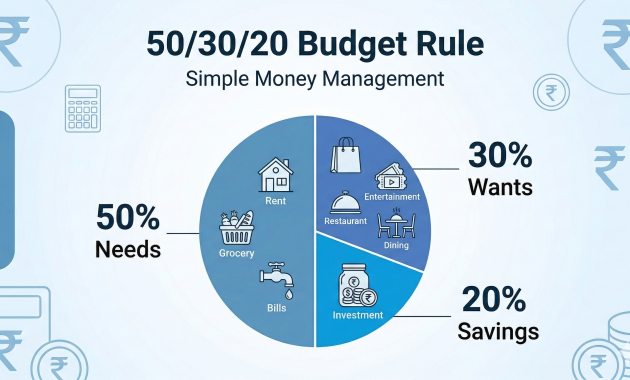
The 50/30/20 rule is a simple way to divide your monthly income into three categories.
The idea is:
- 50% for needs
- 30% for wants
- 20% for savings
Instead of tracking every small expense, this rule focuses on bigger spending categories.
It helps you understand how your money should ideally be distributed.
Step 1: 50% for Needs
Needs are the expenses that you must pay to live and function normally.
These usually include:
- Rent or home loan EMI
- Groceries
- Electricity and utility bills
- Transportation
- Insurance premiums
- Basic healthcare costs
If your monthly income is ₹50,000, then according to the rule:
₹25,000 should ideally cover your essential expenses.
Of course, this number can vary depending on the city you live in.
Step 2: 30% for Wants
Wants are things that make life enjoyable but are not absolutely necessary.
These might include:
- Eating out
- Online shopping
- Movies or entertainment
- Subscriptions (Netflix, music apps, etc.)
- Weekend trips
Using the same ₹50,000 example:
₹15,000 could be spent on lifestyle and enjoyment.
This category is important because budgeting should not make life feel restrictive.
A healthy financial plan allows some room for enjoyment.
Step 3: 20% for Savings
The final part of the rule focuses on building financial security.
Savings include:
- Emergency fund
- Investments
- Retirement savings
- Paying off loans faster
If your income is ₹50,000:
₹10,000 should ideally go toward savings or financial goals.
This part is the most important because it builds long-term stability.
Why Many People Like This Rule
The biggest advantage of the 50/30/20 rule is simplicity.
You don’t need complicated spreadsheets or financial apps.
Instead, you just focus on balancing three major areas of spending.
For people who feel overwhelmed by budgeting, this method provides a clear starting point.
Does This Rule Work for Everyone?
Not always.
Some people live in cities where rent alone takes up a large part of income.
Others may have family responsibilities or education loans.
In those cases, the percentages might need adjustment.
For example:
- 60/20/20
- 55/25/20
The goal is not to follow the rule perfectly, but to create awareness about spending.
A Practical Way to Start Using It
If you want to try the 50/30/20 rule, start with a simple step.
Look at your last month’s bank statement and divide your expenses into three groups:
- Needs
- Wants
- Savings
Many people are surprised by the results.
Sometimes the “wants” category becomes much larger than expected.
Once you see the pattern, small adjustments become easier.
Small Changes That Make a Big Difference
Budgeting does not mean cutting everything you enjoy.
Often, small habits create the biggest impact.
For example:
- Cooking more meals at home
- Reducing unused subscriptions
- Planning purchases instead of impulse buying
Even saving an extra few thousand rupees each month can grow significantly over time.
Final Thought
Managing money is not about strict rules or perfect discipline.
It is about understanding where your money goes and making conscious choices.
The 50/30/20 rule is simply a guide to help you balance spending, enjoyment, and saving.
It may not be perfect for every situation, but it can be a very good starting point.
Because once you become aware of your spending patterns, improving them becomes much easier.