
Most people think about saving money.
But very few people prepare for unexpected situations.
Life does not always move according to plan.
A sudden medical bill, a job loss, a family emergency, or even a major house repair can appear without warning. And when that happens, the question is simple:
Do you have money ready to handle it?
That is exactly why an emergency fund is important.
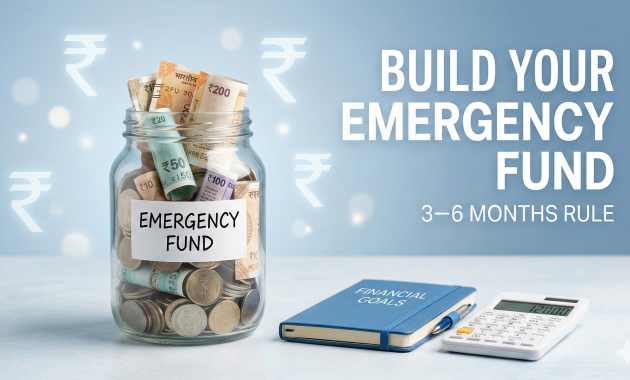
What Is an Emergency Fund?
An emergency fund is money you keep aside only for unexpected situations.
It is not for:
- Shopping
- Vacations
- Festivals
- Buying gadgets
It is for situations where you need money immediately and cannot wait.
For example:
- Losing a job
- Medical emergencies
- Urgent home repairs
- Family emergencies
Think of it as a financial safety cushion.
Why Many People Ignore Emergency Funds
Let’s be honest.
Saving for emergencies does not feel exciting.
People prefer spending money on things they can see immediately — like a new phone or a weekend trip.
But emergencies don’t wait until you are ready.
Without an emergency fund, people often depend on:
- Credit cards
- Personal loans
- Borrowing from friends or family
And that can create more stress during an already difficult situation.
So How Much Emergency Fund Is Enough?
Financial experts usually suggest saving 3 to 6 months of living expenses as an emergency fund.
But let’s make this simple.
First calculate your monthly expenses, such as:
- Rent or home EMI
- Groceries
- Electricity and internet
- Transportation
- School fees
- Medical expenses
- Other basic needs
Suppose your monthly expenses are:
₹40,000
Then your emergency fund should ideally be:
- Minimum: ₹1,20,000 (3 months)
- Better: ₹2,40,000 (6 months)
This gives you breathing space if something unexpected happens.
Who Should Keep a Bigger Emergency Fund?
Some people may need more than 6 months of expenses saved.
For example:
- Self-employed professionals
- Freelancers with unstable income
- Single-income families
- People with high financial responsibilities
In such cases, keeping 6–12 months of expenses may be safer.
Where Should You Keep Emergency Money?
The emergency fund should be easy to access.
Avoid locking it in investments that are hard to withdraw.
Good places to keep emergency funds include:
- Savings account
- High-interest savings account
- Liquid mutual funds
- Short-term fixed deposits
The goal is safety and accessibility, not high returns.
How to Build an Emergency Fund Slowly
Many people think they must save the entire amount immediately.
That is not necessary.
You can start small.
For example:
- Save ₹5,000 every month
- Save ₹10,000 every month
- Save a portion of bonuses or extra income
Within a year, the fund can grow surprisingly large.
Consistency matters more than speed.
When Should You Use the Emergency Fund?
This is very important.
Use it only for real emergencies, such as:
- Medical crisis
- Job loss
- Urgent repairs
- Unexpected financial hardship
If you use it for non-essential expenses, it loses its purpose.
What Happens After You Use It?
If you withdraw from your emergency fund, start rebuilding it again.
Think of it like a backup battery.
Whenever it drains, recharge it.
This habit keeps your financial life stable.
A Simple Way to Remember
Emergency fund is not about earning profits.
It is about buying peace of mind.
Knowing you can survive a few difficult months without panic changes how you handle money.
It makes financial decisions calmer and smarter.
Final Thought
Financial security is not built overnight.
It is built through small habits repeated over time.
Creating an emergency fund may feel slow at first.
But one day, when life throws an unexpected challenge, you will be grateful that you prepared for it.
Because the best time to build an emergency fund is before you need it.